The Sheepdog Coalition

PhotobucketPhotobucketPhotobucketPhotobucketPhotobucketPhotobucketPhotobucket
Advertise with us! For opportunities email our Admin.

Showing posts with label john smith. Show all posts

Sunday, July 17, 2011

Review: The Wolf and the Sheepdog - John Smith - Part 2

Well, I've finished the book since the last part of this review, and not much of my opinion has changed, if at all.


John deals with some scary situations. He regularly finds himself face to face with society's predators. While he usually comes out on top, I wonder what kind of long-term effects these encounters will pose on his psyche. But maybe that's, the difference - because I don't think it will have much effect at all.

I'm grateful for guys like John. I'm grateful because it's his sacrifice that enables me to lead the life of relative saftey that I do. I'm glad to have met him (even if only online) and look forward to his contributions to this site.

Below is a short interview conducted through email with John, to give a broader look at his mentality regarding his profession and his creative works.


-For those considering a purchase of this book, what can you tell them about yourself and this book?

I am a serving police officer in Canada and have over ten years of experience. Through my years of policing I have found strength from this career and it is amazing the growth of character that can occur when you are involved in a career that has a good probability of injury or death from another human being.

My book, The Wolf and The Sheepdog is a collection of short stories, each short story relates to a situation that I have experienced. I write in first person narrative so the reader can experience the calls through my eyes, picking up the sights, sounds and smells that the call delivered to me. By publishing the book under “fiction” allowed me to express my emotions in vivid creative detail.

-For someone considering a career in street policing, what advice could you extend to 'prepare' them for the challenges that lay ahead?

Working the street is the most amazing place to be if it is truly your place. What I mean by that is a lot of people join policing with a very unreasonable expectation of what the job entails. The street is a fast paced, violent and dangerous atmosphere and if you want to go out there and be a lone cowboy it is not a place for you. Police function on tactics and these tactics involve a pack mentality. Sure the calls come that you are working one man and you have to handle the situation solo but in a major city backup is always close.

The other side of the coin is that if you a slacker or a coward, well policing is not for you also. By not taking your calls or by being a coward you are placing the extra work on your team mates and if cowardice is your vice, you take the lives of others in you hand. Every call you go to is a gun call because we bring a gun to it, if you don’t want to fight to the death to save others, find another job.

Policing will change you because you will see the dark, predatory side of human nature. Educate yourself on post traumatic stress and its symptoms, because if you are a hard working officer that is eager to get to work you will see the worst calls and in the end we are all human beings. Post traumatic stress is a normal reaction to an abnormal situation, so the more you know about the back lash of adrenaline and stress the better you are to cope with it.

To be prepared get educated on the reality of policing, get and stay in top physical shape, learn to fight and build a strong warrior mindset. 

If you have these, this job will be the most amazing thing to experience in your life.

-For someone considering a career on the other side of police work, what advice can you lend to the people wanting to work in the 'ivory tower'?

The only thing I can say is do your time on the street (at least ten years) and never forget where you came from. I can understand why police officers change when they get promoted, hell; I changed when I became an officer. Their roles have changed but they always have to ask themselves, “Have I become that guy. That guy who I always called an Asshole when I worked the street?”.

I always ask myself if I am being fair with the civilians I deal with and if I am treating them properly. It takes a lot of will power to forget the last call and start on a clean slate with every person I meet.

The brass expects us to be fair, professional and exercise discretion when we deal with the public but the guys at the top seem to forget that they need to lead by example.

-Maybe it's not the same for everyone, but what are some techniques you've developed to 'decompress' from a traumatic experience?

The top decompression technique for me is exercise. I train hard, keep myself in good shape and keep trying to sharpen my skills. Being physically fit allows your body to handle the increased heart rate caused but stress and adrenaline. A high level of strength is also required to professionally deal with violent offenders, especially those offenders that are chemically addicted and / or have insanity issues.

The next thing that I would recommend to anyone is write down your experiences, bleed the emotions out of your body that you have hidden away. I cannot explain what happens when you write, I can just tell you from personal experience that the hidden suffering that you carry leaves you.

I also work at building my warrior spirit; I am a follower of the Bushido philosophies, a set of rules that were developed by the Samurai’s hundred of years ago. I find that the closer I follow my moral compass the stronger I feel, but following the path of right and wrong is a hard one. It is defiantly easier to put your head in the sand, to brush things under that carpet but if you take a stand and fight for it, becoming stronger is the only out come. 

I know that choosing the right action is always harder to do but in the end it is the right action. When I breathe my last breath in this world I know that I have worked hard at doing what is right and have constructed healthy emotion boundaries with friends, enemies and family because I stood up for what was right.

-Have you changed at all since writing this book?

When I wrote The Wolf and The Sheepdog I had no intentions of publishing it, it was mere fate that it was published. Writing The Wolf and The Sheepdog unlocked a lot of hidden emotions that I did not know were chewing away at me, emotions that were stirring up waters inside of me that should have been calm. Because of writing this book, jotting down my personal inner most feelings and showing the raw side of my emotional being, I have walked away a healthier and happier person.

Friday, July 8, 2011

Review: The Wolf and the Sheepdog - John Smith - Part 1

No, it's not John Smith conducting the review. It's me - Bill, wish - whatever you've come to know me as. I'll be taking you deeper into the pages of The Wolf and the Sheepdog, a book written by one of the contributing authors on this site; John Smith.

Visit John's site to order a copy of the book or enjoy a little more literature about his works - HERE.

I should start this review out by saying that some of the material in this book caught me by surprise. I have years of working with young offenders and other delinquent types under my belt, and still I didn't expect the harsh reality of the dark corners so viciously represented by smith. I'll delve deeper into the intricacies of his writing style a little later, but I'll get some of the administrative stuff out of the way first.


The book is just about 400 pages - a compilation of literature written by John Smith - a serving police officer in an undisclosed 'major metropolitan city'. He writes about his 'hot calls' and some smaller 'thoughts'. Almost written as a freestyle poetry, some of the smaller pieces like "Self-Image" come across as tongue-in-cheek prose but definitely have poetic influence. He also makes mention of specific phrases in pieces like "Princess" where the references to the all-so-familiar cup of coffee are written almost as dramatically as the encounter with the princess herself.

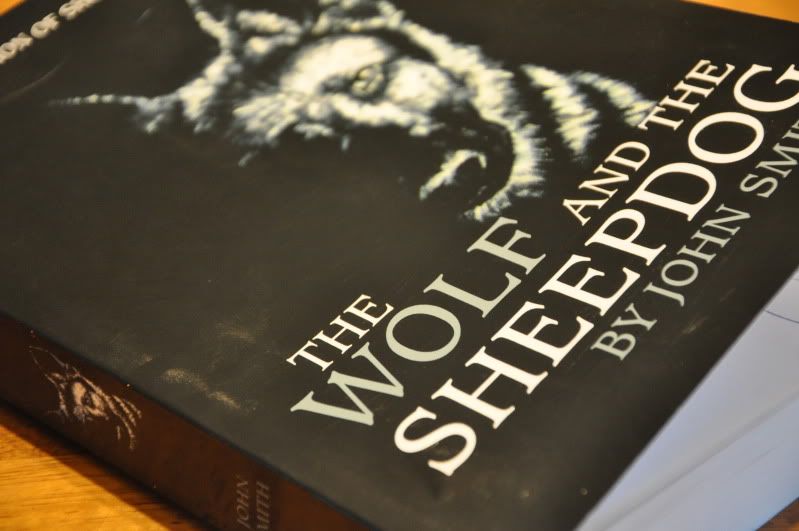
The book rings in at just over 20 bucks. You can pick it up online from any of the sources listed below.

AMAZON

BUY.COM

WOLF AND SHEEPDOG

On the back of the book is a little blurb dedicated to one of John's artworks. You can get it as a print that is coated with a material to make it water resistant. When the print is purchased, ten dollars goes to Camp Carmangay - a day camp dedicating to providing positive experiences for troubled youths.

*

I'm on page 328 as of this writing, so I feel like I can give a pretty good idea of what the main ideas of this book include. Pending some big surprise at the end, I've got a good idea of some of the points John is trying to make.

There are a few recurring themes that I'd like to do my best to outline, though a lot of the material can be taken very subjectively. The stories recount the 'hot calls' or very intense out-calls that John has been on. Most of them deal with people suffering some sort of drug abuse and many end in violence. Fortunately, John's been the one to make it out on top of those experiences, even if it meant nursing a broken hand in the process.

It's a deep look into the invisible darkness that surrounds us. I don't mean to sound dramatic when I say that - but it's the truth. There is no such thing as a good person or a bad person, just people who make decisions. Some make decisions fueled by narcotic rage, others out of the kindness of their hearts. It's a fact of life - bad stuff happens. I'm happy to have guys like John out on the block, hunting the guys who want to do harm to me.

That's another part of the puzzle for John - the hunt. He makes reference to 'hunting' bad guys numerous times. He talks about stalking shadows - trying to track down the bad guys so good guys can sleep soundly, a clear reference to the Orwellian quote in the front few pages of his book. Most of his 'hunts' end in violence, easily the most hard-to-understand part of his work.

I say it like that because it's exactly how I feel. It's hard for me to understand the sheer brutality that John experiences on the street. I've had a few tussles here and there, but nothing like the insanity that John describes. That's a great thing to say - that I haven't had to deal with situations like that. I hope I never do - and I have guys like John to thank. He talks about violence like he enjoys it, and it's hard to understand as a joe-blow civilian. This is the line where some folks could have a hard time reading more without claiming 'use of force' complaints - and John is quick to address that issue as well.

We find ourselves at kind of an impasse with the police force in Canada. Post G20, we're quick to launch the police into debates of  'brutality' and 'use of force'. There definitely are times where certain police officers use an unnecessary amount of force, even on innocent people - we've seen it before. There are, however, times where the police have to use force - because after all, who else is really going to stop the bad guys?

It's a fine line, and one that John walks carefully, especially with the public-eye-sensitive executives in the 'ivory tower' offices at the police station. There's multiple stories that deal with 'eyes' on the street or, onlookers that will pose as eyewitnesses to whatever goes on. Those people often get so wrapped into groupthink that the first one to make a move will dictate the reaction of those around. If a guy speaks up about 'police brutality', the crowd will often over-emphasize the offensive actions of police. Likewise, if the first guy in the crowd tries to stop the police, unfortunately, the rest seem to follow suit.


John often talks about his 'animal'. This caged beast inside of him that rattles his very soul, snaps at the chance to hunt his bad-guy prey. I honestly feel bad for the sorry sap that has to deal with John's animal. I believe we all have some kind of 'animal' inside of us. It's only in very trying circumstances that we get to let him off the leash. John has harnessed this ability and writes about it fluently. He consistently refers to his 'animal' being let out on people who he believes deserve this type of punishment.

John makes reference in the beginning of his book to his almost therapy-like influence in the writing of this book. It's evident in his writing style that he does in fact find therapy in writing - and it's a good thing, I can't imagine keeping this kind of stuff in. During his description of really heated events, I can almost picture him slapping the keys on his keyboard, just to get the ideas down on paper. A few missed letters and errors in punctuation are perfect examples - like he's getting jacked up just thinking about these incidents.

The sheer violence and trauma of these experiences are behind my comprehension, and I hope it stays that way. John shares his thoughts on societal issues like homelessness, drug abuse, prostitution, familial abuse and more - he might come off as cold to some, but anyone who has worked in any type of social service will see the commonality in his views. He even writes on the importance of dark humour in unsettling situations, another implication of working with society's down-and-out.

In part 2, we're going to take another look at the book in it's entirety and a full interview with the author - John Smith.

Don't forget, we're giving away a free copy of this book - signed by John Smith!