The Sheepdog Coalition

PhotobucketPhotobucketPhotobucketPhotobucketPhotobucketPhotobucketPhotobucket
Advertise with us! For opportunities email our Admin.

Showing posts with label kershaw. Show all posts

Thursday, August 25, 2011

Review: Kershaw Shallot

A couple of things to get us going here - I got a new knife, and a new flash for my camera. What an awesome opportunity to test out my new piece of kit, by taking pictures of more kit!

If any of you followed the thread on the forum about my recent spending, this new flash is the outcome of that conundrum. It's more of a generic flash for my camera but certainly an upgrade from what I was using for lighting, and I won't even post that picture. It even gives DIY a bad name...

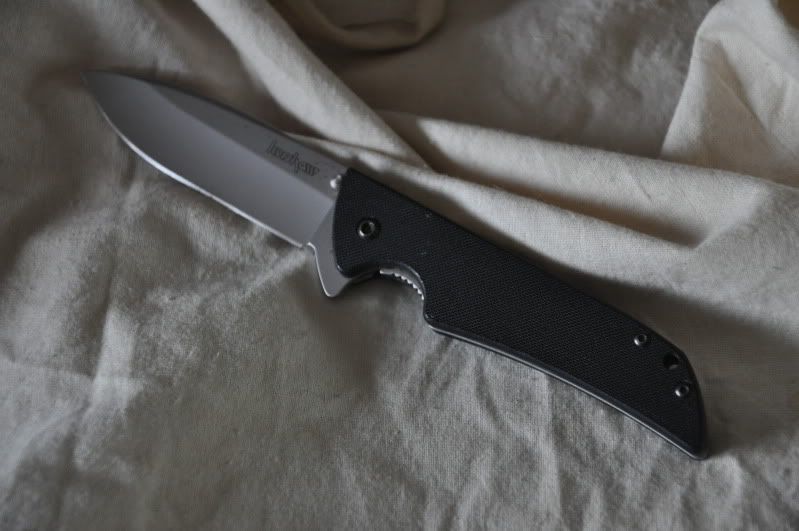
So - I got a new knife.The Kershaw 'Shallot'.

As a gift, I received this knife a few days ago. I havn't really put it through any real cut tests but I have substituted it into place as my current EDC blade. It's done some minor cutting jobs fluidly, just as a new blade should. The real test will come with it's first introduction to drywall - a last resort to shove any blade into that material but a true test to stay on me as an EDC carry option.

It's thinner than my last Kershaw EDC knife, the Clash. The other thing that I like is the way the frame locking system has been incorporated into this knife. The lock is a part of the handle itself - that really cuts down on weight and size. There's no handle outside of the lock itself.

The blade is sleek and sharp out of the box. I got the choice between a serrated edge or not - I went with the serrated one. Why? I kind of look at it as another tool on the tool itself - for the heavier cutting tasks.

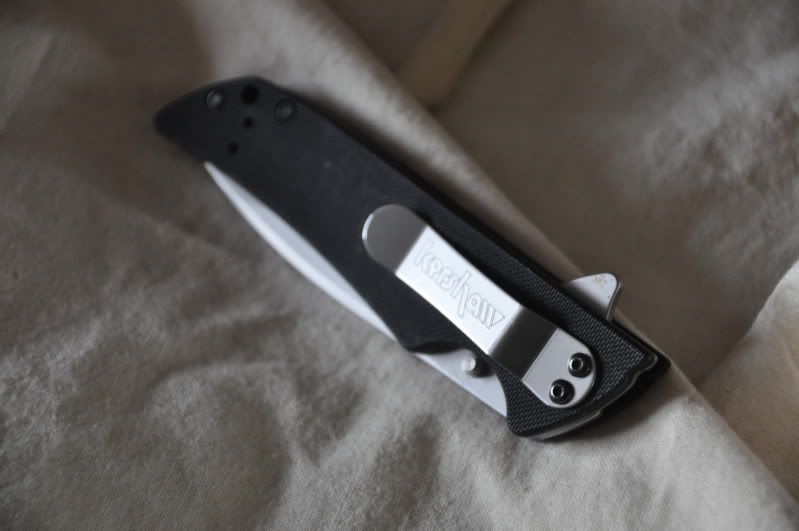
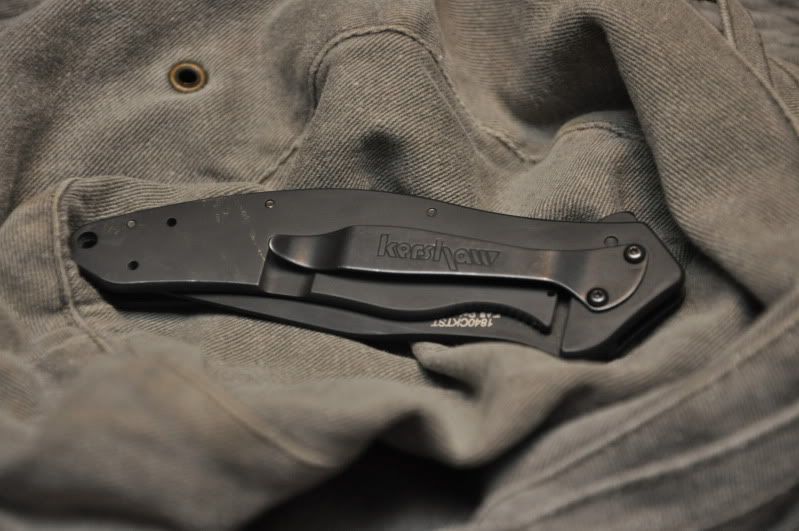
The hardware on this knife kind of reminds me of the Leek, with the three body screws and one pivot screw, it's a design found on quite a few Kershaw models. This one has the same pocket clip that I've accredited Kershaw for including before - screwed to the body, not inside it. It sits nicely in my pocket and draws quickly.
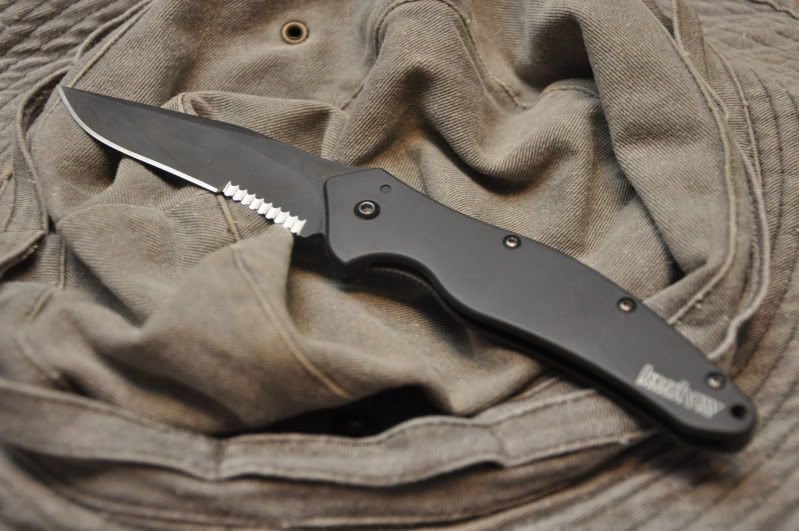

The blade deploys quickly by the use of Kershaw's SpeedSafe system. It snaps into place and stays there - rigid and ready to cut. Made with Sandvik 13C26 steel - I'm sure this blade will stand up to most anything I can put it into.

I'm pleased with the overall feel of this knife - it's light and fast, a nice change from my more clunky previous EDC folder. It is a little 'intimidating' however, and you'll need to fit this knife into your own POU as you see fit. A good folder at a reasonable price - free for me!

Have something to say about this knife? Sound off in our FORUM.


Thanks Dad!

Sunday, July 10, 2011

Review: Kershaw Skyline

Kershaw Skyline
I got the Kershaw Skyline as part of a bunch of knives from a private collector to review. Out of the knives I've got to review from his collection, this one sits on the top of my list. There's aren't many things I can see as a weakness on this model, but this one fits my philosophy of use for EDC almost completely. It's short, sweet and to the point - literally.

The knife's compact handle has a slightly bumpy texture that is flat black. It's got a shape that allows for a finger to slide into the slot just below the blade. The handle has a hole at the bottom for some kind of mancrafted lanyard or paracord attachment. The handle comes to a soft point on the bottom end and fits well in my hand. Some I'm sure would find this design to be too small - however, it fits my hands well.


The Skyline's specs can be found all over the internet and are as follows;

SPECIFICATIONS:
• Steel: Sandvik 13C26 stainless-steel with stone-washed finish
• Handle: Textured black G-10
• Blade Length: 3-1/8 in. (7.9 cm)
• Closed Length: 4-1/4 in. (10.8 cm)
• Overall Length: N/A
• Weight: 2.3 oz.


The Skyline is light, too. When it's in your hand, it heavy enough to feel like a solid tool but light enough not to weigh your pocket down at all. It's got a good, sturdy pocket clip as well - the standard that Kershaw has proven time and time again. The clip stays in place and is attached to the handle with two screws, a design Kershaw has implemented in quite a few knives - and one that adds value to those particular models.

This knife has dual thumb-studs and a flipper. I can't see any scenario where you'd have a difficult time deploying this blade in a hurry. It's smooth to open and locks in position with very little effort. You'd be surprised by how easily the blade slides out of position. With the flipper or the thumb-studs it almost feels assisted, but it's just that smooth.

The blade locks open via a liner locking system. It's tightly held in place with very little lateral movement.


Depending on your philosophy of use, this knife would fit well into almost any EDC role. I can't see many every day cutting tasks that would restrict your use of this particular model. It's sharp, drop point and swift to deploy - three characteristics that I think hold well to many every day cutting chores. 


Sunday, July 3, 2011

Review: Kershaw Groove 1730

Along with a few other toys, I received this knife from a private collection for review.


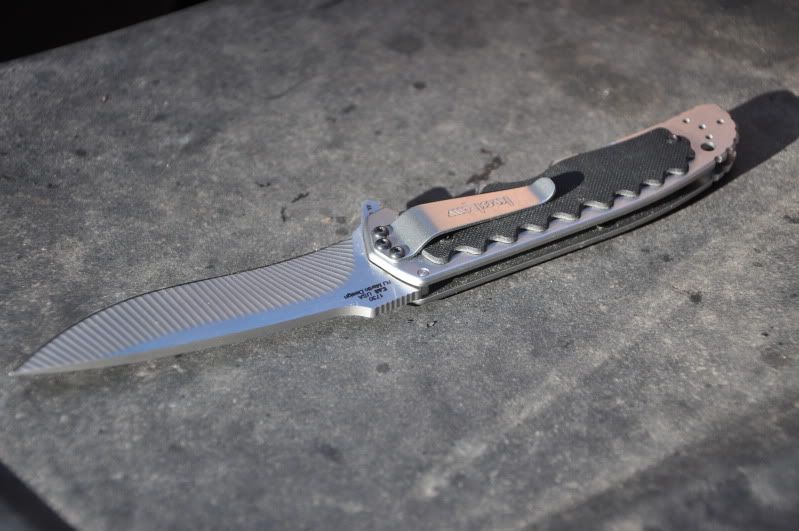
Upon holding it for the first time, it was clearly the heaviest of the handful of folding EDC knives I had gotten. It weighs in at 5.2 ounces. It's not so heavy that I would suggest you steer clear, but if weight is already an issue with your every day carry items, you might want to look further down the Kershaw line.

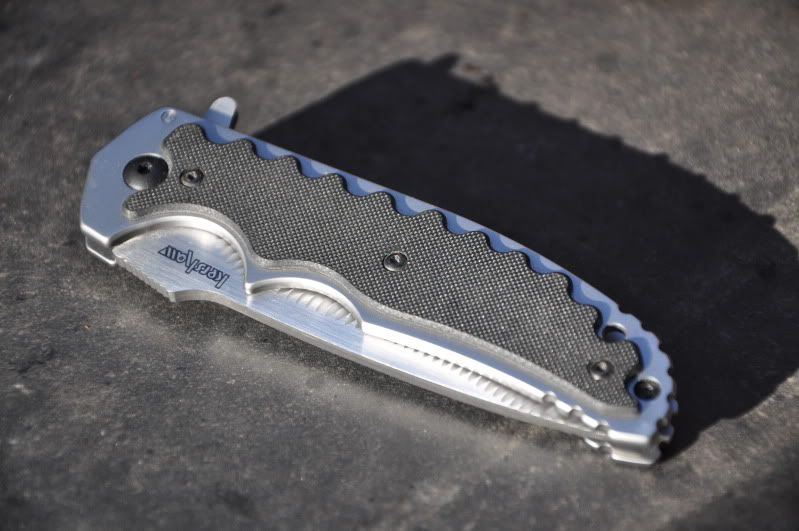
Beyond the weight, the Groove was the nicest to look at from the pack of blades I have here for review. The handle is silver and black, stylized with two finger notches up towards the blade. The blade itself has a ribbed design that ends just shy of the backside. A flipper on the outside edge allows the user to deploy the blade with ease, though one thing that I noticed was the lack of a thumb stud, even though the blade looks to have been shaped with one in mind. An afterthought maybe?


The knife fits comfortably in the hand and really feels like a solid tool - especially given the weight of the unit, it feels like a knife, not a toy. The pocket clip is held on directly to the handle via three screws, a design I've respected Kershaw for having in the past. It works and I've yet to find a Kershaw knife that has accidentally slipped out of my pocket for this very reason.


There are some holes drilled into the back side, but I think they are used more as an aesthetic enhancement than anything else. A hole drilled through both sides will allow for a lanyard attachment - a definite plus for the mancrafters out there.

The blade is held in place with a frame lock. It's very sturdy with no lateral movement at all. Technical specs are found below:

Steel:  Sandvik 14C28N stainless steel with 3-D machined grooves
Handle:  410 stainless-steel with G-10 overlays
Blade Length:  3 1/2 in. (8.9 cm)
Closed Length:  4 1/2 in. (11.5 cm)
Overall Length: 
Weight:  5.2 oz.


Some may find this knife a little large and heavy for use as an EDC tool but it all depends on the task. It's got collector appeal based on that second kind of cool that we hear so often of and surely has utility in it's handle shape and blade design. A good knife, but at around 95 dollars (as listed on Kershaw's site), you'll want to make sure it fits your POU before making the plunge.

Tuesday, June 28, 2011

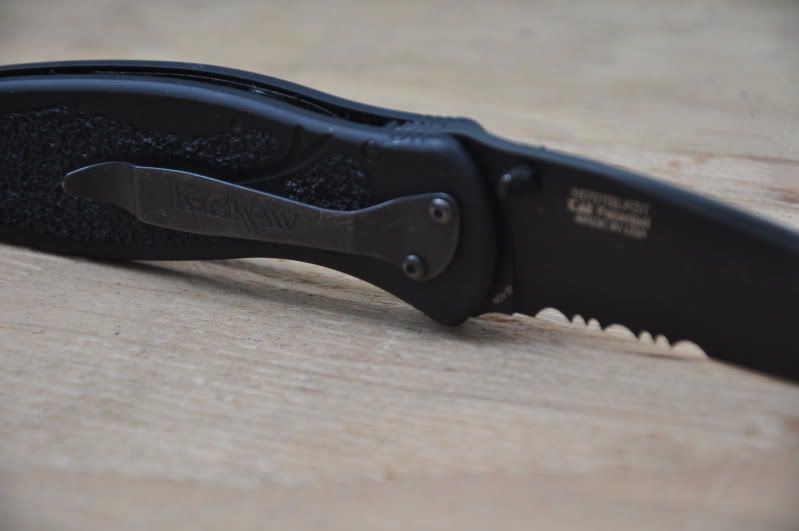
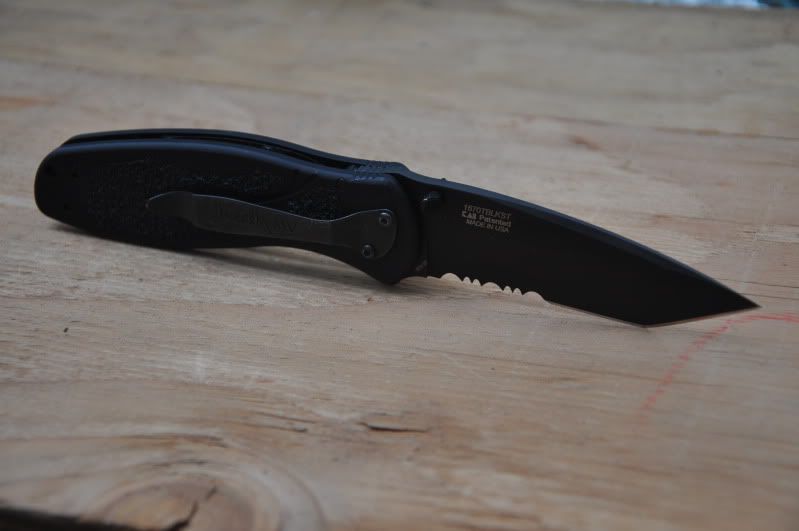
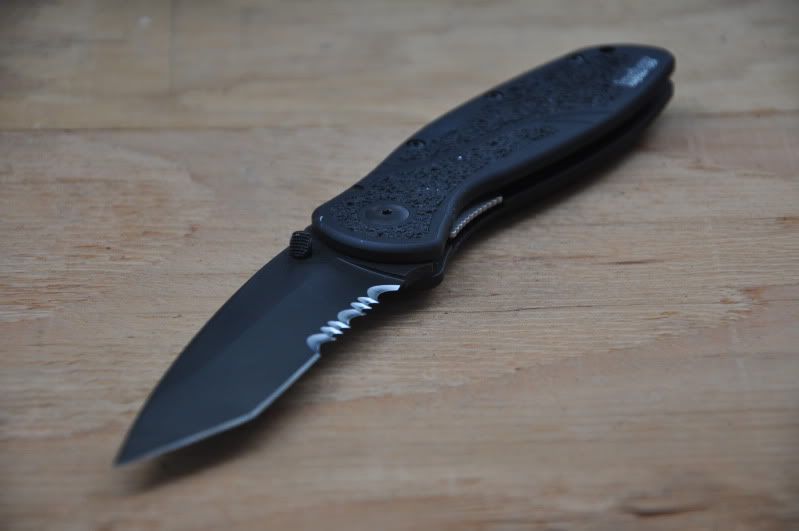
Review: Kershaw Tactical Blur

As with any item marked and marketed as 'tactical', I'm automatically weary of it's practical use. I'm pleased to present to you - the Kershaw Tactical Blur - practical EDC.


The first thing I look for in a practical EDC folder is the pocket clip or otherwise, it's retention device. After seeing the out-of-shape clip on the SOG Flash II I've made it a priority to make sure the clip is attached directly to the body, with more than one screw holding it in place. The Blur, even in it's 'tactical' formation (which is little more than a different grip texture and a flat black colouration) has a well designed pocket clip, found often on Kershaw models.

The technical specs can be found all over the internet:
  • Sandvik 13C26 or 14C28N black coated stainless steel serrated Tanto blade
  • black anodized aluminum handle
  • 3 3/8 inch blade
  • 4.5 inch closed length
  • weighs 4.2 oz  


The knife fills out my hand and is well balanced when the blade is locked open. The blade has grooved thumb studs to engage the assisted-open mechanism - a torsion spring design I'm familiar with after rebuilding my Clash. The blade flicks open with authority and stays open. I'm not about to run any stress tests on this particular blade because it's another loaner from a collector in my area.

The only thing that really turns me off of this knife is the lack of a flipper on the back end of the blade. I'm sure it's just because I'm used to using them, but it's a feature I wish this knife had.


A good blade - a fine handle - a safe locking mechanism and a quick open. At around 50 bucks, I would buy this knife for EDC - maybe with a different blade shape I'd be more likely to drop some more coin on it, but no more than 50 bucks. It's a good knife, but the 'tactical' label, the flat black colouring and the blade shape might give you some unwanted attention - depending on it's use.

Thursday, June 23, 2011

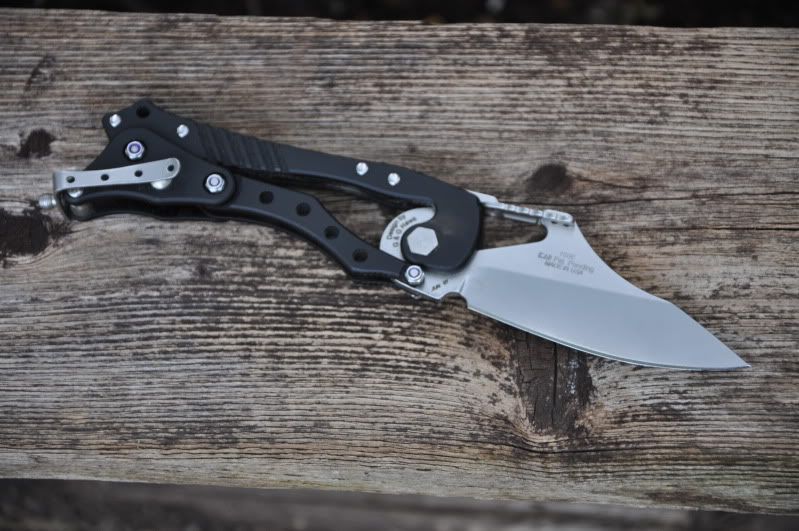
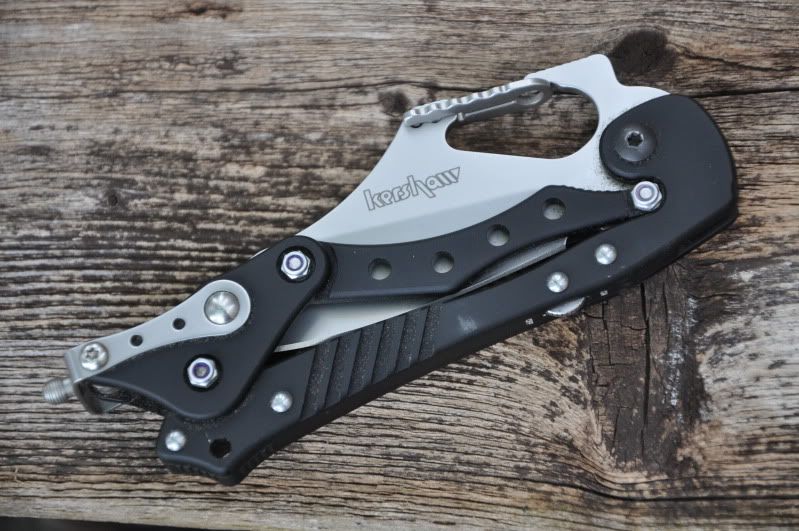
Review: Kershaw 1900 E.T.

The first thing I thought of when I picked this thing up;

"What the hell is this thing for?"

After looking online, I still havn't come up with a solid reason for owning this knife. Borrowed from a friend, it seems this knife best fits the 'collector' POU but I could be wrong - I couldn't even figure out the 'correct' way to open the darn thing. If you know any more about this blade and it's reasonable use, feel free to leave a comment.


The specs are as follows:

• Blade Detail: Plain
• Blade Length: 3.25"
• Blade Material: Sandvik 13C26
• Carry System: Removable Clip
• Handle Material: Aluminum, Black
• Lock Style: Toggle Lock
• Overall Length: 8"
• Special Features: Built-in Carabiner
• Made In: United States


I'm sure this thing has a specific purpose. It's light as anything and very sharp - I'm just not sure of it's intended philosophy of use - and that could be something I'm very unfamiliar with.

It fills out my hand very well and the frame - or lack there of - is skeletonized to keep it light weight. Even passing this around to a few friends, we couldn't figure out the exact purpose for this knife, besides being a cool collector piece and just overall, a cool looking knife.

It's got a built in carabiner attachment point on the blade itself and a very sturdy pocket clip. I couldn't figure out a fast way to open this particular model, but I'm sure that has more to do with my uneducated handling of the knife than anything else. I'm sure this knife has a specific purpose, and any indication of this would be appreciated on our facebook page or as a comment to this post. Little help?

Monday, June 20, 2011

Review: Kershaw Ripcord

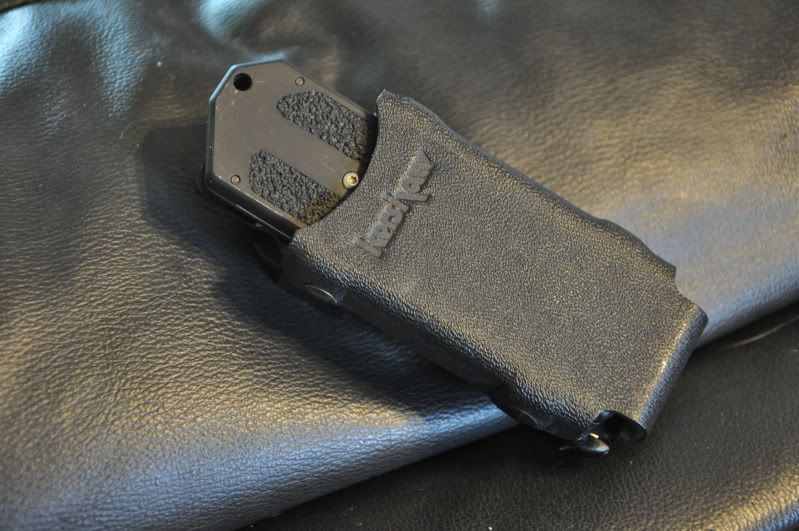
Got an opportunity today to look at a knife I've never seen before. A used blade, on loan from me by a buddy who owns a multitude of knives. This knife is different from any I've had in my hands. It's got a unique design and features that are suited to a specific purpose. It's got a longer, tougher blade with the size of a compact folder, all in a little package that is easily clippable to webbing, belts, boots or whatever else you can get this little holster onto.

Kershaw's Ripcord
I've seen this knife advertised online for anything from 80 to 100 dollars. It seems to have been built for use as a knife to be included in a 'system'. Like anything, you've got to consider your philosophy of use with this item - it's unique in the way it's deployed. You pull the knife out and away from the holster to engage it, and likewise - you put it on the little peg and push in to hide it away again. It's a little awkward at first, but with some practise, I could easily deploy the blade in a few attempts.

The handle in it's compressed form was initially kind of difficult to get a grip on, but once you get your head around it, the mechanism works quite well. Extended, it sits well in the hand and feels balanced.


The handle has a spot for a paracord dongle - as always, appreciated by my fellow mancrafters. The whole unit fits in my hand when it's all collapsed, and not heavy at all - you'd hardly notice it on a vest or clipped to a bag.

The knife seats well in the holster and wiggles about when shaken - but not so much as to come out at all. I couldn't make it jump out of it's little slot. The knife extends smoothly and locks into place. The blade extends from the top of the handle and slides back into place when not in use.

A nifty knife - and at a hundred dollars it's still semi-affordable. It would probably fit for some people's requirements, be a toy for others, and a non-issue for the rest. A good knife, a solid holster included and a worthy piece of kit in my books.

Thanks to "ceriksson" from ASC for the reminder to include technical specs;

Technical Specs:

  • Sandvik 13C26 stainless-steel blade with Tungsten DLC coating
  • 6061-T6 anodized aluminum handle with Trac-Tec inserts
  • Blade Length: 3 7/16in. (8.6 cm)
  • Closed Length: 4 3/8 in. (11.1 cm)
  • Weight: 4.2 oz.


For those interested in seeing a cut-test; this one is not my knife!
I can't put this one into any extensive cut testing because I don't want to void the trust of the owner - or the warranty by Kershaw for that matter...   =)

Saturday, February 19, 2011

Kershaw Clash: New EDC


Today I went out to Bass Pro in Vaughn, ON. I went in looking for something else and came out with this guy.

The Kershaw Clash.

It's about hand sized and a bit heavier than it looks.

Prior to obtaining this one, I have become accustomed to using a Kershaw Leek, a CRKT M16 EDC and a Boker Reality Series Recurve.

I was looking at a SOG folder but decided to go with kershaw for a number of reasons. Number one, customer service. before Christmas I got the Leek. During it's use it had become way to slick to open. Being the little DIY'er that I like to believe I am, I thought I'd take it apart and tighten the spring up a little. Not knowing anything about assisted-open knives, I unscrewed it with the spring wound.

POP

Parts go flying everywhere, bending the tension bar in the process. After a few emails with Kershaw - I recieved a parts kit and repair tool in the mail. FREE.

I got it from a third party source and the company STILL honoured their product. Needless to say I was VERY happy with this exchange and was more than willing to buy another product.


I purchased Kershaw because I have NEVER - read: NEVER - had a problem with their blades. I had dinged up the CRKT, chipped the Boker.... that Leek has taken a BEATING and still cuts. It could definitely use a good sharpening, but it CUTS. I've cut boxes out of drywall with it, and it still CUTS. Good in my books.

Now, onto the Clash.

It fits in the palm of my hand with about a centimeter out on each end. I don't care much for measurements - instead, we'll stick to real-world ratios. The clip on the back is nice and strong. It's wide and really sturdy.


The knife POPS open - could use a little working, which I'm sure is bound to happen once I am back at work.

The frame very closely resembles a Leek. The screws are all in the same spots and the blade dips into the frame the same way. It's definitely heavier than the Leek but not so much that it won't be adopted into my EDC kit.

I got the spearpoint blade with semi serrations on the bottom, my first serrated blade!

It stands up to the fingernail test very well. Very, very sharp.

Overall, a very nice knife at a very affordable rate.